History has lots of unsolved riddles. There are missing cities, readable manuscripts, and ancient gadgets that baffle scientists. These are not just dusty facts. They are the source code for stories where heroes chase secrets and villains try to bury them.
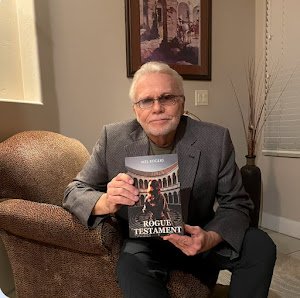
Let’s explore real-life mysteries that make books like The Rogue Testament so gripping. Such books are the epitome of peak storytelling, just plain talk about why these puzzles matter.
The Voynich Manuscript: A 600-Year-Old Puzzle
Imagine finding a book from the 1400s filled with strange plants, star charts, and writing nobody can read. That’s the Voynich Manuscript. For decades, codebreakers, historians, and even AI have tried to crack it. Is it a medical guide? A secret diary? A hoax?
Thriller lovers love this kind of mystery. What if the manuscript hides a map to a lost treasure? Or a forgotten language that unlocks ancient secrets? Authors use real mysteries like this because they are already halfway to a plot. Readers think this is true. And that is what hooks them.
Roanoke Colony: The Vanished Settlers
In 1587, over 100 people settled on Roanoke Island, Virginia. When a supply ship returned three years later, everyone was gone. The only clue was the word “Croatoan” carved into a tree. Did they join a Native American tribe? Were they killed? No one knows.
This real-life disappearance is perfect for stories. Think hidden journals, coded mysteries let the author mix fact and fiction so smoothly, you can’t tell where truth ends and imagination begins.
The Antikythera Mechanism: Ancient Greek Tech
Found in a shipwreck, this 2,000-year-old bronze gadget looks like a clock. But it’s way more advanced. It tracked the stars, predicted eclipses, and even marked Olympic dates.
How did ancient Greeks build something so complex? Why was the technology lost for 1,500 years? Stories thrive on “out-of-place” artifacts like this. What if the mechanism were part of a bigger network of devices? Or held blueprints for inventions that could change the world? Real finds like this make fictional plots feel eerily possible.
The Tomb of Lazarus: Fact vs. Legend
In Cyprus, there is a church built over a tomb said to hold Lazarus, the man Jesus resurrected. But what if the story is not what we think? Thrillers twist real legends. What if Lazarus’s resurrection was a cover-up? What if his tomb hid clues to a secret movement in early Christianity?
Books like The Rogue Testament use real places like this because they are already soaked in mystery. Walk into the dimly lit crypt, and you will see why. It is easy to imagine a charger finding hidden code carved into the walls.
Why These Mysteries Make Perfect Stories
People hate loose ends. We want answers. But unsolved mysteries? They are playgrounds for writers. Take the Hala Sultan Tekke Mosque in Cyprus. Rumors say it hides Christian relics stolen by Ottoman raiders. What if a character found proof? Or a villain destroyed it to keep the secrets?
Real places let the author ask “what if” in ways that feel urgent. Books turn these questions into an adventure. And readers love it because the real mystery lingers in their minds. Could this be true? That doubt is what keeps them turning pages.
Go Hunt Your Own Mysteries
You don’t need to write a book to feel the thrill. You just have to visit a museum. Google “unsolved historical puzzles,” or grab a book like The Rogue Testament that turns real enigmas into fiction. History is not just about answers. Sometimes, the best stories are the ones where questions never end.